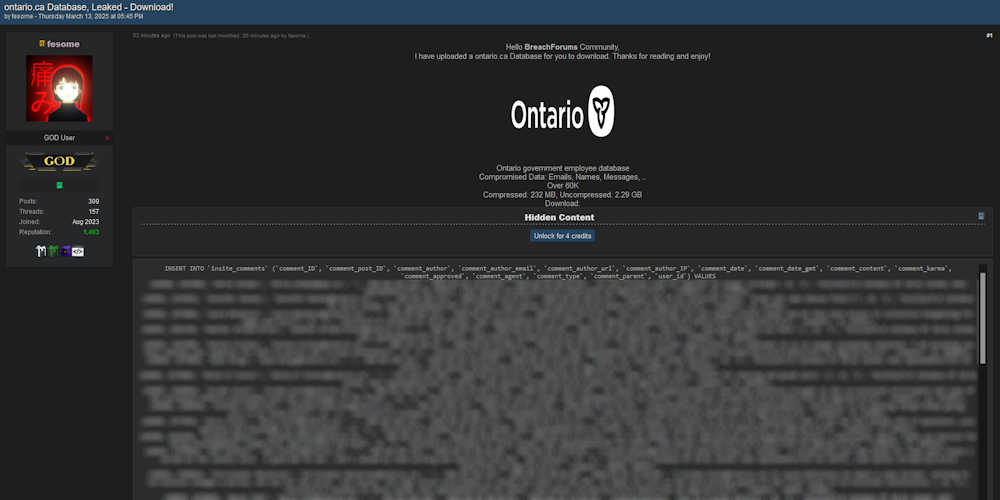
In a worrying development for cybersecurity, **a threat actor known as 'fesome' has reportedly leaked sensitive information from an Ontario government employee database**, affecting more than 60,000 records. This data was made available on a cybercrime forum, showcasing the vulnerabilities present in government institutions as they face increasing threats from cybercriminals.
"This dataset includes employee names, government-issued email addresses, messages, and potentially login credentials," said cybersecurity experts, emphasizing the severity of the situation. The leaked data is significant in size, compressed to 232 MB and expanding to over 2.29 GB uncompressed, indicating a large volume of compromised information.
"This dataset includes employee names, government-issued email addresses, messages, and potentially login credentials,"
The implications of such a breach are considerable. Experts underline the risks associated with the leaked information, particularly concerning phishing attempts, identity fraud, and the potential for further cyberattacks on public institutions. "Whenever sensitive data like this is exposed, it opens the door not only to immediate risks but also long-term vulnerabilities for the affected organization," remarked a cybersecurity analyst specializing in governmental data security.
"Whenever sensitive data like this is exposed, it opens the door not only to immediate risks but also long-term vulnerabilities for the affected organization,"

The leak raises substantial questions about data security practices within the Canadian government. Stakeholders are calling for an urgent review of existing protocols to safeguard sensitive information. "This incident is a wake-up call for government entities to evaluate and enhance their cybersecurity strategies, as such leaks can undermine public trust," stated an IT executive familiar with the sector.

"This incident is a wake-up call for government entities to evaluate and enhance their cybersecurity strategies, as such leaks can undermine public trust,"
Impact and Legacy
Details about the incident reveal that the breach occurred on **March 13, 2025**. The information compromised was hosted on an open web network, complicating tracking and remediation efforts. The threat actor's choice of platform suggests a deliberate move to maximize visibility and impact, further aggravating an already tenuous cybersecurity landscape.

"The mere existence of this leak indicates a systemic problem in protecting sensitive data," remarked a government cybersecurity consultant. Analysts suggest that the Ontario government must take proactive measures not just to secure systems but also to inform affected employees.
"The mere existence of this leak indicates a systemic problem in protecting sensitive data,"
"Transparency is crucial in these situations. The government should communicate with employees about potential risks and steps they can take to protect themselves," advised a cybersecurity policy expert, stressing the importance of maintaining public trust.

Looking Ahead
As investigations into the breach continue, there is a growing consensus that only comprehensive, multi-layered security strategies can help mitigate the risks posed by such data leaks in the future. "We cannot afford to be reactive anymore. Cyber defenses need to evolve continually to keep pace with sophisticated attacks," said a leading voice in the cybersecurity sector.
In conclusion, the situation serves as a critical reminder of the ongoing battle between cybersecurity and cyber threats. As governmental and private entities work to shore up their defenses, the need for vigilance and preparedness has never been more apparent. In the face of rising threats, safeguarding personal information remains a paramount responsibility for all organizations.