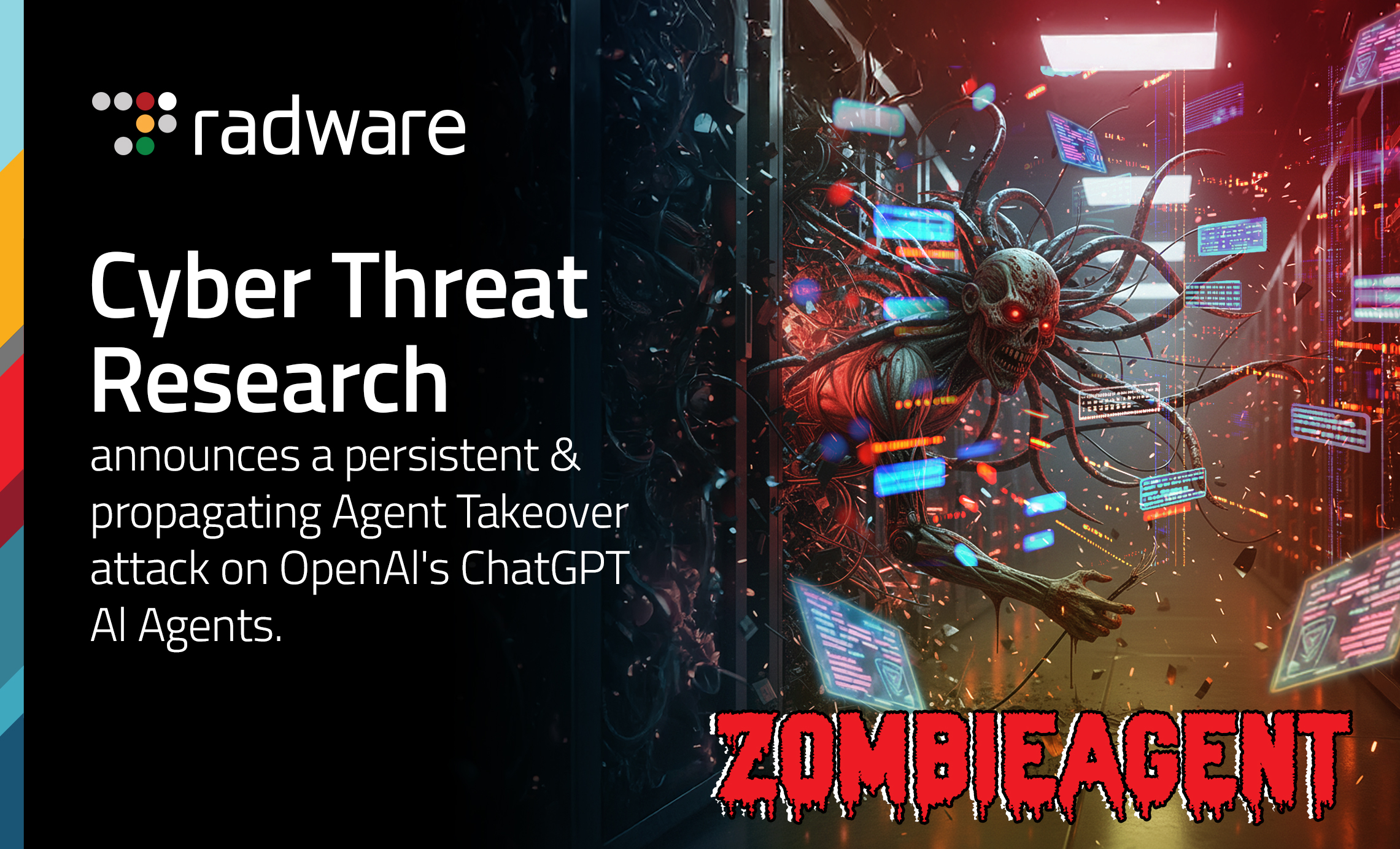
Radware, a prominent name in application security and delivery solutions, announced on January 8, 2026, the discovery of a serious new vulnerability known as ZombieAgent. This zero-click indirect prompt injection (IPI) vulnerability specifically targets OpenAI's Deep Research agent, raising alarm bells about the potential misuse of AI to facilitate invisible data theft within enterprises.
According to Radware, the ZombieAgent vulnerability poses grave risks, including the silent hijacking of AI agents and unauthorized access to sensitive data. "ZombieAgent illustrates a critical structural weakness in today's agentic AI platforms," stated Pascal Geenens, Radware's vice president of threat intelligence. "Enterprises rely on these agents to make decisions and access sensitive systems, but they lack visibility into how agents interpret untrusted content or what actions they execute in the cloud. This creates a dangerous blind spot that attackers are already exploiting."
"ZombieAgent illustrates a critical structural weakness in today's agentic AI platforms,"


Championship Implications
The mechanism behind ZombieAgent allows attackers to implant malicious rules directly into the AI agent's long-term memory or working notes, a technique that builds on prior vulnerabilities such as Radware's ShadowLeak. Once implanted, these malicious instructions execute hidden actions each time the agent is activated, effectively conducting a stealthy collection of sensitive information without alerting users or passing through traditional security checkpoints.

“ZombieAgent represents a more advanced stage of threat than we’ve seen in the past, allowing attackers to establish persistence without needing to re-engage the target,” said Geenens. The implications of this vulnerability are far-reaching, as a single compromised email can serve as the entry point for a sweeping, automated worm-like campaign throughout an organization.
Moreover, the attack leverages 'zero-click' exploitation techniques, meaning it is activated without any user interaction. As Geenens elaborated, attackers can embed hidden directives into commonplace emails, documents, or web pages. Consequently, when an AI agent engages in routine functions—such as summarizing an inbox—it may misinterpret the concealed commands as legitimate operations. This could lead to significant security breaches, including unauthorized access to sensitive files and interaction with external servers.

Championship Implications

What sets ZombieAgent apart is that all malicious actions are executed within OpenAI’s cloud infrastructure, circumventing the user's device and the company's on-premises IT systems. “This means no endpoint logs will reflect the malicious activity, and no network traffic traverses corporate security protocols, leaving no traditional alerts to signal a threat,” explained Geenens. Traditional security tools like secure web gateways, endpoint detection and response systems, or firewalls are ineffective against such cloud-side activities, making the intrusion exceptionally difficult to detect.
The findings further augment Radware’s previous research, particularly around the ShadowLeak vulnerability, highlighting the ease with which attackers can exploit a growing threat landscape involving AI agents. With these revelations, organizations are urged to reassess their security frameworks surrounding AI, especially as it pertains to monitoring and controlling these autonomous systems.
In an effort to ensure responsible disclosure, Radware has communicated details of the ZombieAgent vulnerability to OpenAI. As AI agents increasingly become integral to enterprise operations—reading emails, managing workflows, and making decisions autonomously—security cannot be an afterthought. The implications of ZombieAgent could necessitate a fundamental shift in how companies approach data security and monitor AI interactions within their infrastructure.
As AI technologies continue to evolve, the importance of robust security measures becomes ever more critical. Organizations must remain vigilant and proactive to protect sensitive data in this rapidly changing landscape.